Test safety circuits construction equipment is a critical step to ensure machine safety and prevent unexpected downtime on job sites. When a construction machine refuses to start or enters safety mode, the issue is often linked to sensors, switches, or wiring faults rather than a major engine failure. In this guide, you will learn how to test safety circuits construction equipment step by step using Jaltest INFO Web.
Why Safety Circuits Matter in Construction Equipment
Safety circuits play a key role in protecting both the operator and the machine. In fact, even a small electrical fault can stop the entire equipment from operating.
Moreover, these systems are designed to react instantly when a risk is detected, which is why accurate diagnostics are essential.
Key Components of Safety Circuits
🔹 Safety Switches (door, seat, brake)
They detect the presence of the operator and prevent the machine from starting in unsafe conditions.
🔹 Position and Pressure Sensors
They monitor the boom, bucket, pedals, and hydraulic circuits.
🔹 Electrical Wiring Harness and Connectors
They transmit safety signals to the control unit.
🔹 Safety Control Unit (ECU)
It analyzes signals and blocks the machine if a risk is detected.
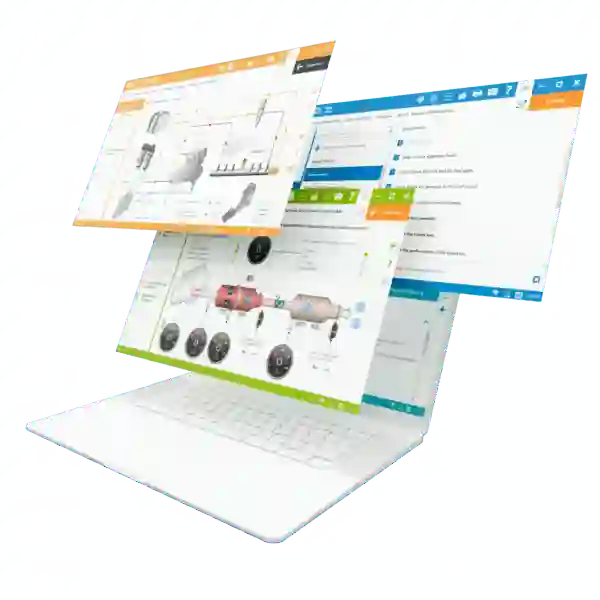
👉 Jaltest INFO Web provides wiring diagrams, component locations, and reference values for each system.
How to Test Safety Circuits Step by Step (Recipe Method)
First, identify the symptom clearly, such as a no-start condition or safety lock mode.
Then, use Jaltest INFO Web to access wiring diagrams and reference values.
Finally, test each component systematically instead of guessing.
✔️ Step 1: Identify the symptom
First, observe the machine behavior:
- No start condition
- Safety mode activation
- Warning lights on dashboard
This step is essential because it defines the direction of the diagnosis.
✔️ Step 2: Use Jaltest INFO Web
Then, access Jaltest INFO Web to retrieve:
- Wiring diagrams
- Component locations
- Reference voltage and resistance values
- Step-by-step testing procedures
As a result, technicians avoid random testing and save valuable time.
✔️ Step 3: Test components systematically
After that, verify:
- Safety switches (seat, door, brake)
- Sensor signals using reference values
- Wiring continuity and connector condition
Finally, replace any defective component and validate the system.
Assembly: Building a Reliable Safety Circuit
- Clean connectors and electrical grounds
- Replace faulty sensors or switches
- Clear fault codes and validate the system
🎨 Workshop Tip: Document the diagnosis with diagrams and values for the customer.
Storage and Preventive Maintenance of Safety Circuits
- Store switches and sensors in a dry environment
- Replace worn components during maintenance
- Periodically verify safety sensor values
👉 Preventive maintenance reduces unexpected downtime on construction sites.
Mechanical Variations: Other Safety Scenarios
- Faulty seatbelt sensor
- Stuck hydraulic sensor
- Cut or oxidized wiring harness
- Outdated safety ECU software
👉 Jaltest INFO Web covers multiple brands and models of construction equipment.
Conclusion: Jaltest INFO Web, the Key to Job Site Safety Diagnostics
Testing safety circuits is no longer complex when you have the right technical data.
With Jaltest INFO Web, technicians can diagnose faster, repair with precision, and ensure the safety of both machines and operators.
👉 Book your demo now and see how your interventions become faster, more accurate, and safer.