Introduction
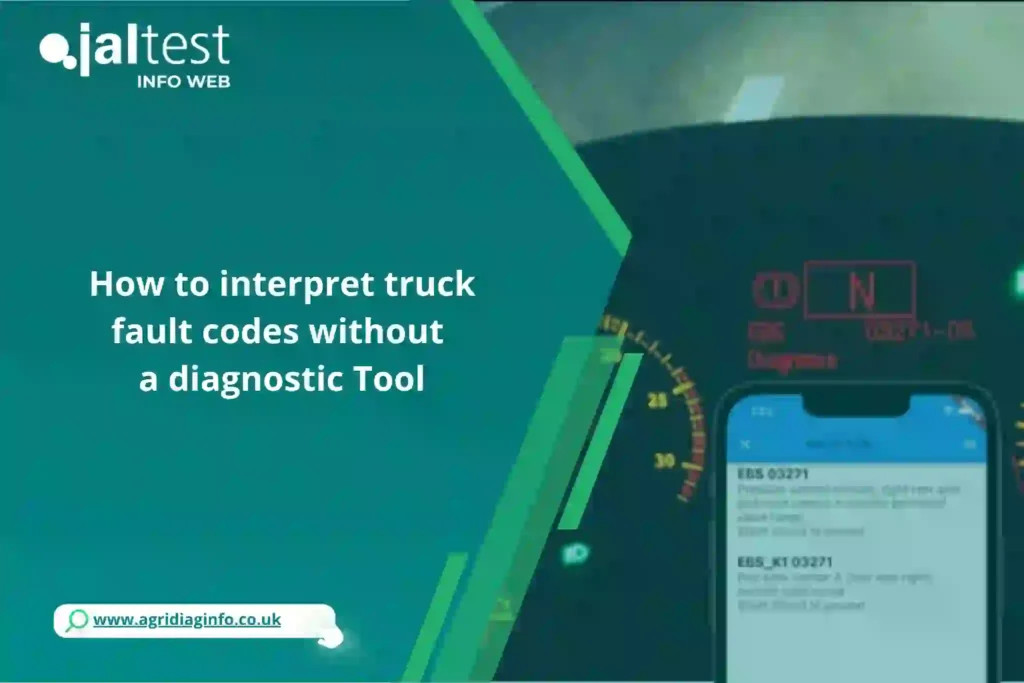
Understanding interpreting truck fault codes without a diagnostic tool is very useful when a breakdown occurs on the road or in a workshop without proper equipment. Although a diagnostic scanner provides the most accurate results, drivers and technicians can still identify useful information from dashboard alerts and basic vehicle signals.
Modern trucks are equipped with electronic systems that continuously monitor engine, braking, and emissions performance. When an issue appears, the system generates warning signals that can help guide the first level of diagnosis.
Check Dashboard Warning Lights First
The dashboard is the first source of information.
Each warning light provides a different level of severity:
- A red light indicates a critical fault requiring immediate action
- An orange light signals a warning or performance issue
- A yellow light usually indicates a minor or pending issue
For example, an engine warning light combined with power loss often points to an injection or emissions problem.
Therefore, observing the color and symbol is the first step in identifying the issue.
Understand Basic Fault Code Logic
Some trucks display fault codes directly on the dashboard screen.
Even without a diagnostic tool, these codes often follow a structured format:
- A letter identifying the system (engine, transmission, brakes)
- Numbers describing the type of fault
- Additional digits indicating the specific component
As a result, technicians can already narrow down the affected system before deeper diagnostics.
Most Common Faults Identified Through Codes
1. AdBlue and SCR System Issues
AdBlue-related faults are very common in modern trucks.
Typical causes include:
- Low AdBlue level
- Faulty NOx sensors
- Pump malfunction
- Crystallization in the system
These issues often lead to engine derating and reduced performance.
2. Engine-Related Faults
Engine fault codes usually indicate combustion or sensor issues.
Common causes include:
- Clogged fuel filters
- Faulty injectors
- Incorrect fuel pressure
- Defective engine sensors
These problems often result in poor performance and higher fuel consumption.
3. Brake System Faults
ABS and EBS systems are highly sensitive to electronic issues.
Frequent causes include:
- Damaged wheel speed sensors
- Wiring faults
- Control module errors
Because they affect safety, these faults require immediate attention.
4. CAN Bus Communication Errors
Modern trucks rely heavily on electronic communication systems.
When the CAN network fails, you may see:
- Multiple warning lights at the same time
- Random fault messages
- Loss of communication between ECUs
This type of issue can be complex and misleading.
Limitations of Diagnosing Without Tools
Although basic interpretation is possible, there are important limitations:
- Fault codes may not be fully displayed
- Multiple issues can produce similar symptoms
- Root causes are difficult to confirm
- Misdiagnosis risk is high
Therefore, manual interpretation should only be considered a first diagnostic step.
How Jaltest Info Web Helps
A technical platform like Jaltest Info Web helps bridge the gap between basic observation and professional diagnosis.
It provides:
- Exact fault code definitions
- Possible causes and conditions
- Electrical wiring diagrams
- Step-by-step troubleshooting procedures
- Component location information
As a result, technicians can move from symptom identification to accurate repair instructions quickly.
Conclusion
Learning how to interpret truck fault codes without a diagnostic tool helps technicians and drivers react faster during breakdown situations. However, this method remains limited and should not replace professional diagnostic equipment.
With solutions like Jaltest Info Web, fault codes become actionable information, enabling faster repairs, reduced downtime, and improved fleet reliability.