Is your Toyota forklift displaying an unfamiliar symbol or a fault code, and you’re unsure whether you should stop the machine immediately?
What if these symbols are not problems… but a simple language your machine uses to communicate with you?
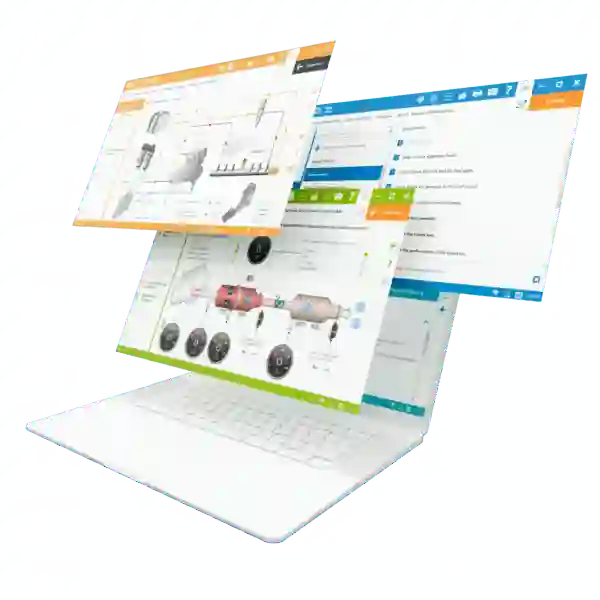
Understanding Toyota forklift warning pictograms and error codes helps prevent serious breakdowns and saves valuable time when using a tool like Jaltest INFO Web.
Overview: A Simple but Essential System
Toyota forklifts use pictograms and fault codes to inform the operator about machine status.
- Objective: Quickly detect anomalies
- Diagnostic time: 5 to 20 minutes
- Level: Easy
- Recommended tool: Jaltest INFO Web
👉 These systems are designed to improve safety and prevent costly downtime in warehouses.
Common Warning Pictograms and Their Meaning
⚠️ General Warning
Indicates a non-critical issue that still requires attention.
🔋 Low Battery
Signals insufficient voltage or charging issues.
🌡️ High Temperature
The engine or hydraulic system is overheating.
🛢️ Hydraulic Oil Warning
Low level or insufficient pressure in the hydraulic system.
🚨 Red Triangle Alarm
Critical alert: immediate stop is recommended.
👉 Every pictogram should be taken seriously to avoid full machine shutdown.
Toyota Fault Codes: How to Understand Them
Toyota forklift fault codes are numeric or alphanumeric signals that indicate a specific issue.
Common affected systems:
- Electric or thermal engine
- Hydraulic system
- Safety sensors
- Electronic control unit
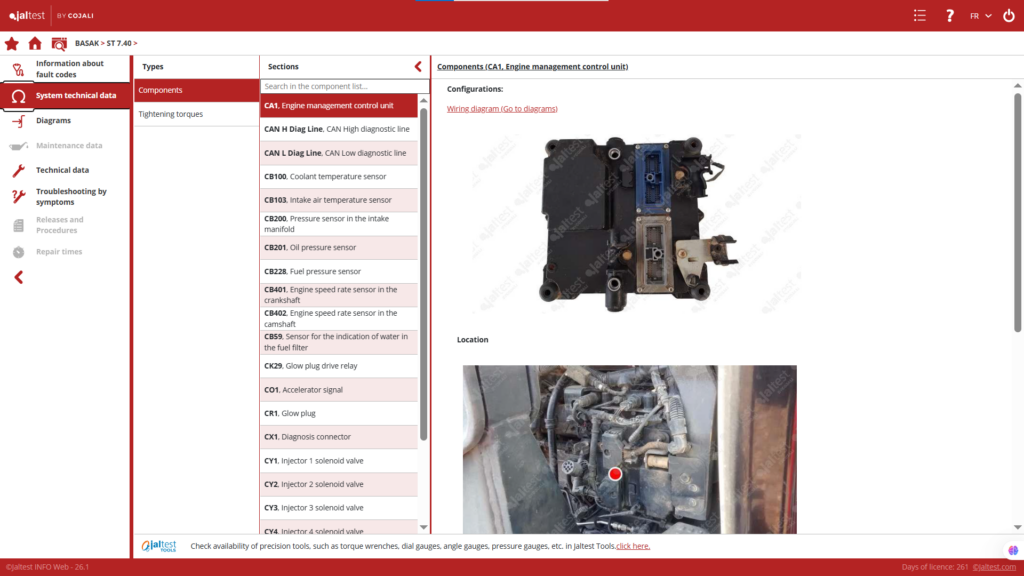
With Jaltest INFO Web, each fault code is translated into:
- Clear cause of the issue
- Severity level
- Repair solution
Step-by-Step Diagnostic Guide
🔍 Step 1: Identify the Pictogram or Code
Check the forklift dashboard display.
💻 Step 2: Search in Jaltest INFO Web
Enter the code or symbol into the technical database.
📘 Step 3: Analyze the Problem
Determine whether the fault is:
- Electrical
- Hydraulic
- Mechanical
🛠️ Step 4: On-Machine Inspection
Check:
- Battery level
- Electrical connections
- Hydraulic oil level
🔄 Step 5: Repair and Test
Fix the issue and restart the forklift.
Diagnostic Logic (System Operation)
The system works as a simple communication chain:
- Pictogram = visual alert
- Fault code = precise diagnosis
- Jaltest INFO Web = technical interpretation
- Repair = final solution
Best Practices
- Never ignore red alerts
- Treat one fault code at a time
- Test after each repair
Backup and Prevention
To avoid unexpected downtime:
- Save fault codes in Jaltest INFO Web
- Track failure history
- Perform regular inspections
- Check battery and hydraulics weekly
👉 Good maintenance significantly reduces downtime costs.
Improvements and Best Practices
You can improve forklift management with:
- Mobile use of Jaltest INFO Web
- Operator training on pictograms
- Preventive checks before each shift
- Analysis of recurring fault codes
Conclusion
Toyota forklift pictograms and fault codes are not obstacles—they are safety tools.
With Jaltest INFO Web, every warning becomes a fast diagnosis and every issue turns into a clear solution.