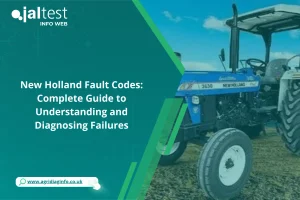
How can you interpret a New Holland fault code and quickly identify the cause of a failure?
New Holland machines are widely recognized for their reliability in agricultural and professional applications. However, like all modern equipment, they include advanced electronic systems capable of detecting and recording faults.
When a problem occurs on a tractor or agricultural machine, a New Holland fault code usually appears on the dashboard.
But what does this code actually mean? And how can you determine whether the problem comes from a sensor, wiring issue, or mechanical component?
A proper diagnostic approach helps avoid unnecessary repairs and reduces machine downtime.
Why do New Holland machines display fault codes?
Modern New Holland models use electronic control units (ECUs) that continuously monitor different systems:
- Engine;
- Fuel injection;
- Transmission;
- Hydraulic system;
- Electronic control systems;
- Emission systems.
When the ECU detects an abnormal condition, it stores a fault code to guide technicians during troubleshooting.
However, a fault code does not always mean that a component is defective.
For example, a sensor-related fault may be caused by:
- A damaged sensor;
- Poor electrical connection;
- Broken wiring;
- Incorrect power supply.
Common types of New Holland fault codes
Engine-related faults
These may involve:
- Fuel injection;
- Engine pressure;
- Temperature;
- Air intake system;
- Engine management.
These faults can lead to power loss or irregular operation.
Hydraulic system faults
They may indicate:
- Incorrect pressure;
- Sensor problems;
- Hydraulic control issues.
A complete analysis is required before performing repairs.
Transmission faults
These can be related to:
- Electronic gear management;
- Position sensors;
- Control systems.
How to perform an effective New Holland diagnostic?
To correctly identify the source of a fault, technicians should follow several steps.
1. Read the fault code
The first step is retrieving the code stored in the ECU and identifying the affected system.
2. Check technical information
Technicians need access to:
- Wiring diagrams;
- Test values;
- Component locations;
- Testing procedures.
3. Inspect the related components
Checks may include:
- Sensors;
- Wiring harnesses;
- Connectors;
- Actuators.
New Holland diagnostics with Jaltest INFO Web
To analyze a New Holland fault code list effectively, professionals need reliable technical information.
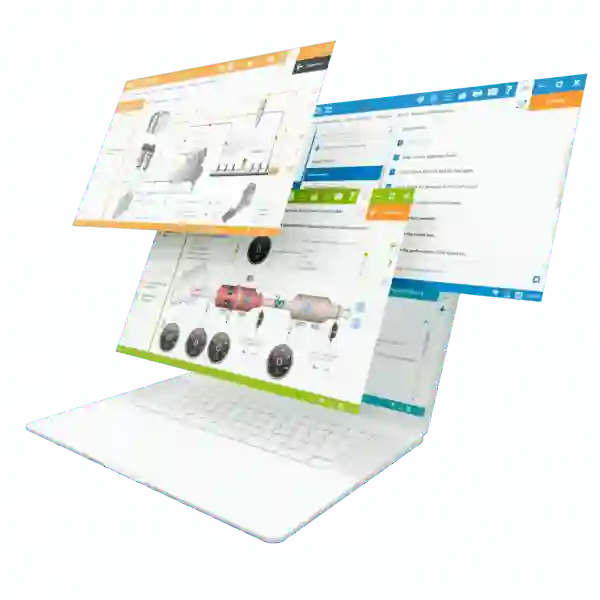
With Jaltest INFO Web, technicians can access:
- Fault code explanations;
- Wiring diagrams;
- Technical data;
- Repair procedures.
The platform helps technicians move from a fault code to a clear diagnostic method.
Conclusion
New Holland fault codes are valuable indicators for understanding problems in modern agricultural machines. However, interpreting them correctly requires a complete diagnostic approach.
By combining fault code analysis, component testing, and technical information from Jaltest INFO Web, professionals can reduce downtime and perform more accurate repairs.
A fault code is not just an error message — it is the starting point for an effective diagnostic process.