How can you understand a Deutz-Fahr fault code and quickly identify the cause of a failure?
Deutz-Fahr tractors are designed to meet the needs of agricultural professionals with powerful and increasingly advanced electronic systems. Today, engines, transmissions, and hydraulic equipment are managed by multiple control units capable of automatically detecting abnormalities.
When a problem occurs, a Deutz-Fahr fault code appears on the dashboard. However, this message does not always directly identify the component that needs replacement. It mainly serves as a starting point to investigate the real cause of the failure.
An accurate diagnostic approach helps avoid unnecessary interventions and reduces machine downtime.
Why do Deutz-Fahr tractors display fault codes?
Modern Deutz-Fahr tractors include several electronic systems that continuously monitor:
- Engine operation;
- Fuel injection system;
- Transmission;
- Hydraulic system;
- Sensors and control units.
When an abnormality is detected, the system stores an electronic fault code (DTC) to help technicians identify the affected area.
However, a fault code does not always mean that a component is defective.
For example, a sensor-related fault can be caused by:
- A poor electrical connection;
- Damaged wiring;
- Incorrect power supply;
- Sensor operating outside its normal range.
Common Deutz-Fahr fault codes
Engine-related faults
These may concern:
- Fuel pressure;
- Injection system;
- Engine temperature;
- Emission systems.
These faults can cause power loss or irregular engine operation.
Transmission faults
They may be related to:
- Position sensors;
- Electronic controls;
- Gear management systems.
Hydraulic faults
They may indicate:
- Incorrect pressure;
- Control problems;
- Hydraulic sensor failures.
How to perform an effective Deutz-Fahr diagnostic?
To analyze a Deutz-Fahr error code, technicians should follow a structured approach.
1. Read and identify the fault code
The first step is retrieving the information stored by the control unit.
The technician must understand:
- The fault code;
- The affected system;
- The possible causes.
2. Check technical information
To confirm the cause, technicians need access to:
- Wiring diagrams;
- Test values;
- Component information;
- Repair procedures.
These resources help avoid replacing components without confirmation.
3. Perform the required checks
The technician should inspect:
- Wiring harnesses;
- Connectors;
- Sensors;
- Related actuators.
Deutz-Fahr diagnostics with Jaltest INFO Web
To correctly interpret a Deutz-Fahr fault code list, professionals need reliable technical information.
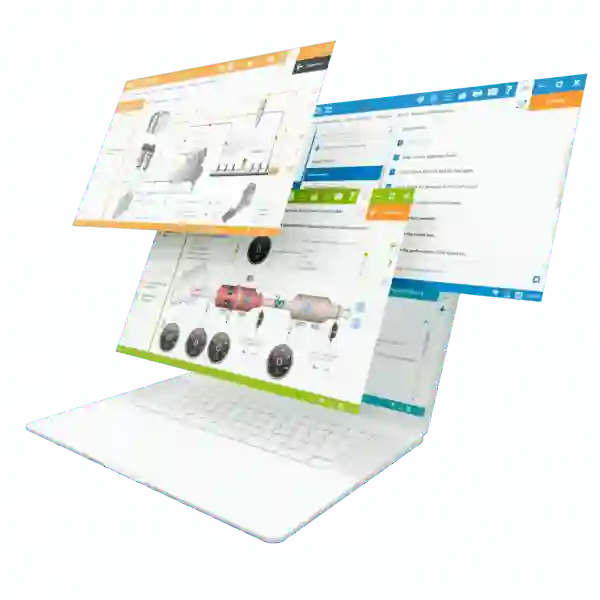
With Jaltest INFO Web, technicians can quickly access:
- Fault code explanations;
- Wiring diagrams;
- Technical data;
- Diagnostic and repair procedures.
The platform helps professionals move from fault identification to accurate repair.