What If a Single Fault Code Could Bring Your Entire Farm to a Standstill?
When a Valtra tractor displays a fault code, is it a serious malfunction or just a temporary warning?
Many technicians hesitate, guess, or replace components too quickly. But the real question is:
Do you truly understand what the machine is trying to tell you?
This is where Jaltest Info Web completely transforms the diagnostic process.
Overview: Why Valtra Fault Codes Are Critical
Modern Valtra tractors are equipped with advanced electronic systems that continuously monitor the engine, hydraulic system, and transmission.
- Difficulty level: Medium to Advanced
- Time required: From a few minutes to several hours, depending on the fault
- Objective: Identify the real cause without replacing parts unnecessarily
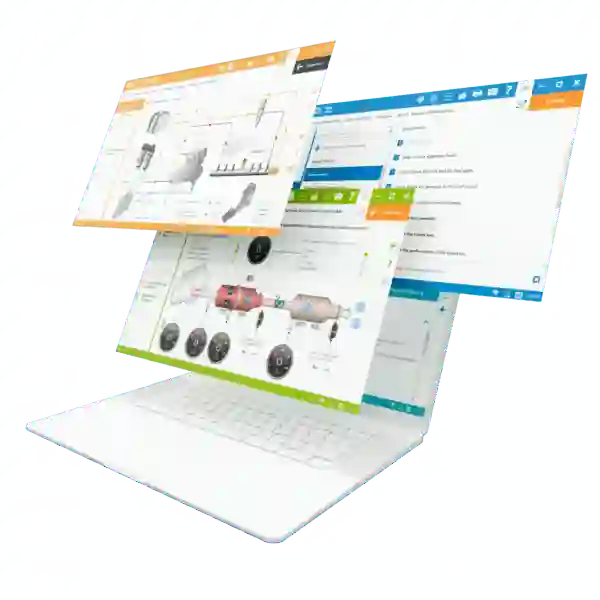
With Jaltest Info Web, technicians can turn a generic fault code into a precise and reliable diagnosis.
Essential Requirements for an Accurate Diagnosis
To effectively analyze a Valtra fault code, you will need:
- Jaltest Info Web → A comprehensive technical database with fault code interpretation.
- A multi-brand diagnostic tool such as Jaltest Diagnostics.
- The manufacturer’s Valtra fault code list.
- Live operating data (sensors, ECUs, and hydraulic systems).
- A technician trained in vehicle diagnostics.
- The tractor’s maintenance history.
Why These Elements Matter
Without these resources, troubleshooting becomes nothing more than guesswork.
Possible Diagnostic Scenarios
- Workshop diagnostics.
- On-site farm diagnostics.
- Preventive diagnostics before the farming season.
Step-by-Step Guide to Diagnosing a Valtra Fault Code
1. Identify the Displayed Fault Code
Carefully read the fault code displayed on the dashboard or retrieve it using the diagnostic tool.
2. Connect the Diagnostic Tool
Connect the diagnostic system to the tractor’s diagnostic connector.
3. Consult Jaltest Info Web
Search for the fault code to obtain:
- The exact meaning of the code.
- The affected system.
- Possible causes.
- Recommended diagnostic procedures.
4. Analyze Live Data
Check key operating parameters such as:
- Hydraulic pressure.
- Engine speed (RPM).
- Engine temperature and sensor readings.
5. Identify the Root Cause
Compare the live operating values with the manufacturer’s specifications to avoid unnecessary repairs.
6. Apply the Correct Solution
Depending on the diagnosis:
- Repair the faulty component.
- Clean or recalibrate the affected sensor.
- Replace the component only when necessary.
Tip: Always confirm the root cause before carrying out any repair.
Building an Efficient Diagnostic Process
A professional diagnostic procedure always follows a clear and logical sequence:
- Read the fault code.
- Analyze the live operating data.
- Inspect the related systems.
- Identify the root cause.
- Perform the targeted repair.
- Complete a final functional test.
Workshop Best Practice
Always begin by checking the simplest possible causes before disassembling complex systems.
A well-organized workshop should also:
- Record every fault code.
- Document every repair.
- Compare similar cases to improve future diagnostics.
Preventive Maintenance and Fault Prevention
A high-performing workshop doesn’t simply react to failures—it works to prevent them.
Recommended best practices include:
- Maintaining a complete history of fault codes.
- Monitoring recurring failures.
- Keeping Jaltest Info Web regularly updated.
- Performing scheduled preventive inspections.
These practices help reduce unexpected machine downtime during the busiest farming periods.
Common Types of Valtra Faults
Valtra fault codes may involve several major systems.
Engine Issues
- Loss of engine power.
- Excessive exhaust smoke.
- Fuel injection problems.
Hydraulic System Issues
- Slow lifting performance.
- Unstable hydraulic pressure.
- Internal hydraulic leaks.
Electronic System Issues
- ECU failures.
- Faulty sensors.
- Communication errors between electronic systems.
With Jaltest Info Web, every diagnostic scenario becomes easier to understand and resolve.
Conclusion: Understand Before You Repair
Valtra fault codes are not random warning messages. They are precise information generated by the machine to help identify specific problems.
Without a proper diagnosis, workshops risk:
- Replacing perfectly functional components.
- Wasting valuable repair time.
- Increasing maintenance costs.
With Jaltest Info Web, technicians can:
- Quickly interpret fault codes.
- Identify the real cause of the problem.
- Apply the correct solution during the first repair.
The real goal isn’t to repair faster—it’s to repair it right the first time.