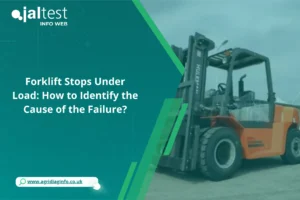
Why does a forklift stop when working under load?
A forklift that works normally without a load but stops when lifting or transporting heavy weight often indicates a problem with a system reaching its operating limit.
In industrial environments, every machine stoppage can affect productivity. Identifying the cause quickly is therefore essential to avoid long downtime.
The cause can come from different areas:
- Electrical system;
- Engine management;
- Faulty sensor;
- Hydraulic system;
- Electronic control system.
Main causes of a forklift stopping under load
1. Electrical power supply problems
For electric forklifts, power loss under load can be caused by:
- Insufficient battery charge;
- Damaged battery cells;
- Faulty electrical connections;
- Power controller failure.
A battery may appear to work normally without load but experience a voltage drop when heavily used.
2. Engine or electronic management faults
For combustion forklifts, stopping under load can result from:
- Fuel injection problems;
- Low fuel pressure;
- Engine overheating;
- Faulty engine sensors.
Electronic control units often store forklift fault codes that help guide the diagnostic process.
3. Hydraulic system problems
When the machine loses lifting capacity or cannot maintain a load, technicians should check:
- Hydraulic oil level;
- System pressure;
- Hydraulic pump;
- Control valves;
- Pressure sensors.
A pressure loss can automatically reduce machine performance.
How to perform an effective forklift diagnostic?
A structured diagnostic process helps identify the real cause of the failure.
Step 1: Identify the failure conditions
The technician should analyze:
- Type of load involved;
- Exact moment when the machine stops;
- Warning indicators;
- Associated symptoms.
Step 2: Read forklift fault codes
Reading forklift error codes helps identify which systems are reporting an abnormality.
However, a fault code only indicates an area to investigate. It does not always mean that the component itself must be replaced.
Step 3: Check the related components
Inspections may include:
- Electrical harnesses;
- Sensors;
- Connectors;
- Hydraulic pressure;
- Control unit parameters.
Forklift diagnostics with Jaltest INFO Web
To efficiently repair material handling equipment, technicians need reliable technical information.
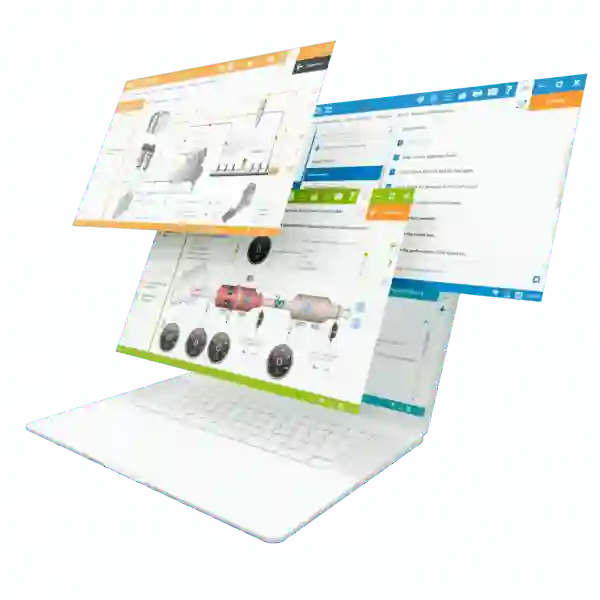
With Jaltest INFO Web, professionals can access:
- Fault code explanations;
- Wiring diagrams;
- Technical data;
- Testing and repair procedures.
The platform helps technicians move faster from the symptom to the real cause of the failure.
Conclusion
A forklift that stops under load can have multiple causes: electrical, electronic, hydraulic, or mechanical.
Accurate diagnostics based on symptom analysis, fault code reading, and access to reliable technical information helps reduce downtime.
With Jaltest INFO Web, professionals have the resources needed to diagnose material handling equipment more efficiently and keep their machines operational.
👉 Request your free demo and discover Jaltest INFO Web.